Browse the latest editions of our maths workbooks in print and digital form. Get instant access to every digital book you buy from NuLake. Read it and add your own notes in the NuLake eFlip Viewer.
Thoughtful ideas for teaching, learning and the next breakthrough.
Blog
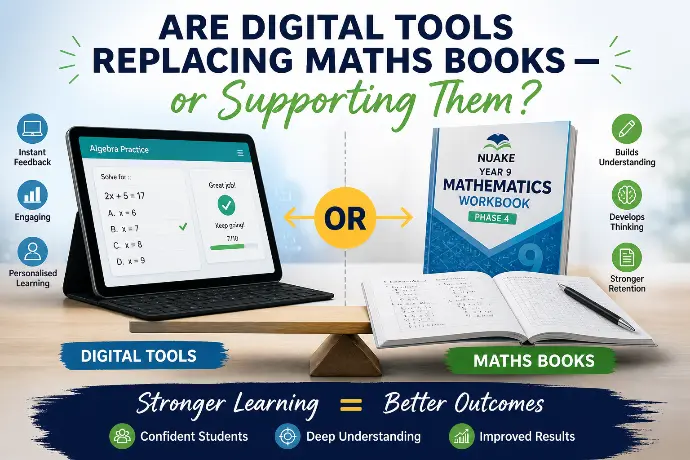
Are Digital Tools Replacing Maths Books - or Supporting Them?
In recent years, digital tools have rapidly become part of everyday classroom practice. From online platforms and apps to AI-powered learning systems, schools are increasingly investing in technology to support student learning.
Blog
Introducing NuLake Year 9 eFlip Cards – Phase 4
Sometimes all you need is a quick reminder to bring a maths idea back to mind. NuLake Year 9 eFlip Cards – Phase 4 offer a casual way to look back over previous work, refresh your memory before a test or exam, and take a look at what is coming next.
Blog
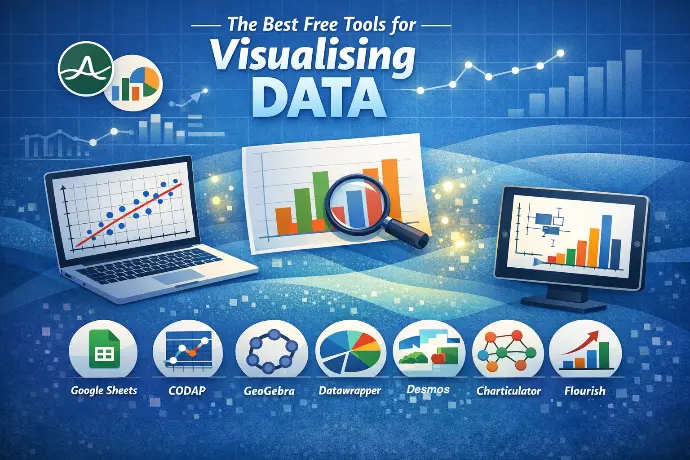
The Best Free Tools for Visualising Data
Data visualisation is one of the fastest ways to help students see patterns, trends, and relationships. The good news? You don’t need expensive software to create clear, classroom‑ready graphs. There’s a whole ecosystem of free tools that are perfect for Statistical Investigations and everyday maths lessons.
Blog
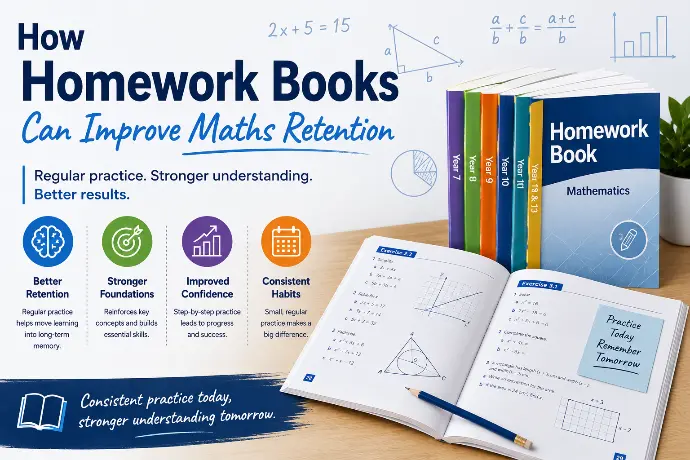
How Homework Books Can Improve Maths Retention
Mathematics is a subject that builds on itself. Each new concept relies on understanding previous skills, making long-term retention essential for success. While classroom instruction provides the foundation, students often need regular practice outside of school to strengthen their understanding and retain what they have learned. This is where homework books play a valuable role.
Blog
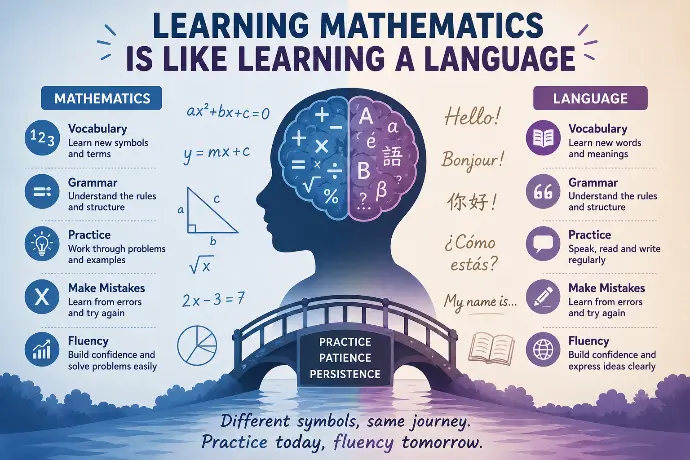
Mathematics Has Its Own Vocabulary
Every language has words that carry precise meanings. Mathematics is no different.
Blog
What Makes Mathematics Different from Other Subjects?
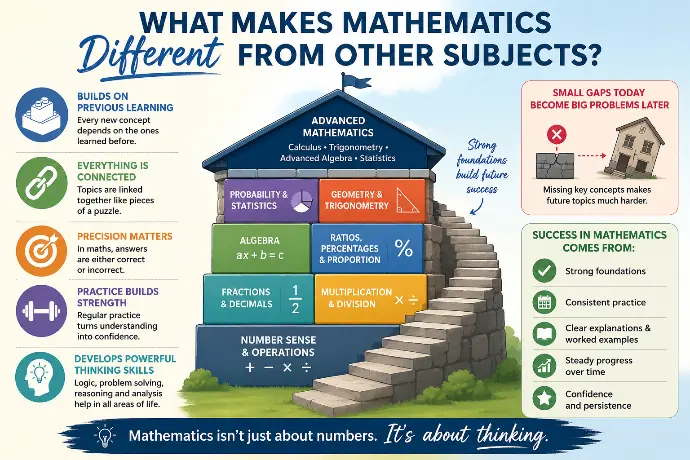
Mathematics is unlike any other subject taught at school. While subjects such as history, geography, science and English all develop valuable knowledge and skills, mathematics has one unique characteristic: every new concept builds upon previous learning . If a student has gaps in their understanding, those gaps tend to grow as the mathematics becomes more advanced.
Blog
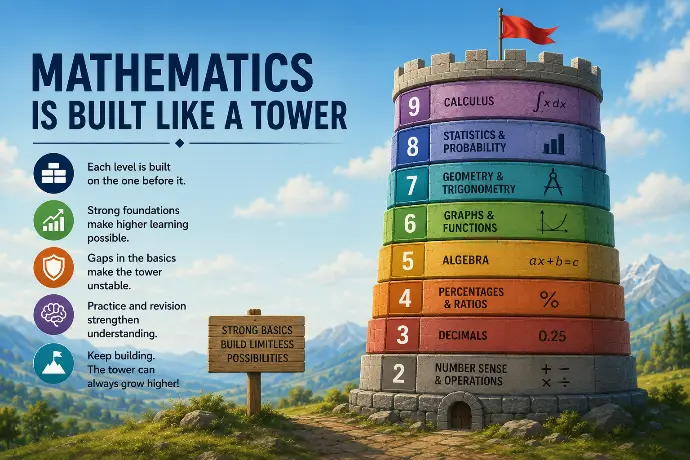
Mathematics Is Built Like a Tower
Imagine trying to build a tall tower by placing the top floor in the air before laying the foundations. It would be impossible. Every level depends on the strength of the one beneath it.
Blog
A Visual Way to Teach Negative Numbers
Negative numbers can feel mysterious to learners. They’re often introduced with rules (“two negatives make a positive”) long before students have a sense of what negatives are. And when understanding is shaky, everything that follows - subtraction, algebra, temperature changes, coordinate grids - becomes harder than it needs to be.
Blog
How to Use NuLake Workbooks for Daily Practice
Daily practice is one of the most powerful ways to build confidence and fluency in mathematics. Just like learning an instrument or training for a sport, small, consistent steps add up to big improvements over time. NuLake workbooks are designed with this philosophy in mind - structured, clear, and easy to use for both independent learning and classroom support.
Blog
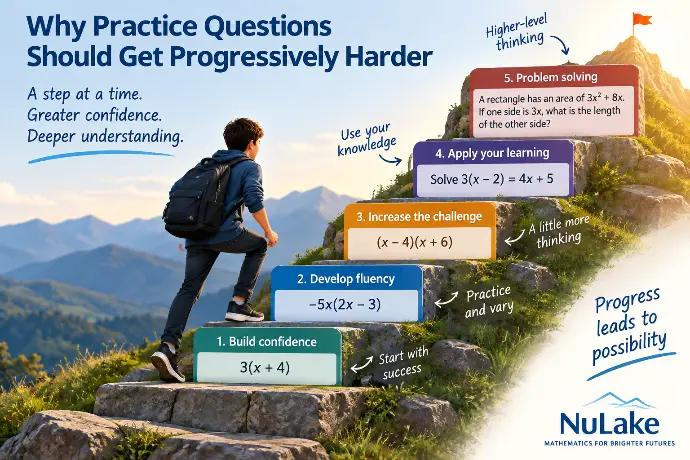
Why Practice Questions Should Get Progressively Harder
Learning mathematics is not simply about completing lots of questions. The order in which those questions are presented matters.
Blog
How to Read a Graph Without Being Misled
Graphs are meant to make information clearer, but the way they’re designed can just as easily distort the story. For students, teachers, and even adults, it’s surprisingly easy to be misled by a graph that looks convincing but hides important details. Understanding how scale, truncation, and visual bias work helps learners read graphs critically - a key skill in maths, science, and everyday life.
Blog
Why Struggle is a Sign of Learning Not Failure
A reassuring message for students and parents
Blog
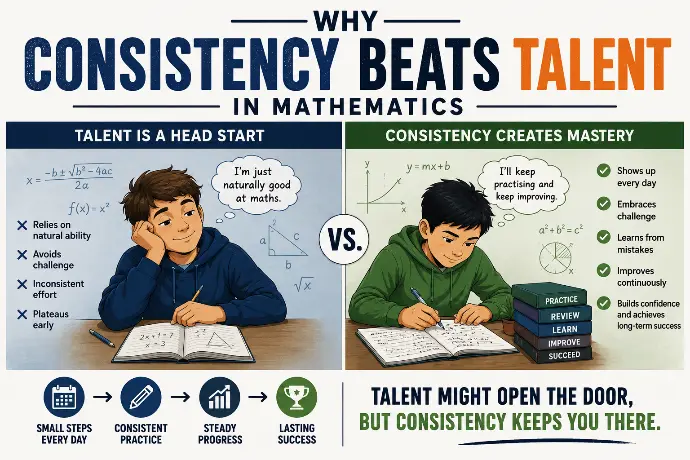
Why Consistency Beats Talent in Mathematics
When people think about maths, they often imagine that success comes from natural intelligence or “being a maths person.” Some students seem to understand concepts instantly, solve problems quickly, and achieve high grades without much visible effort. It’s easy to believe that talent is the deciding factor.
Blog
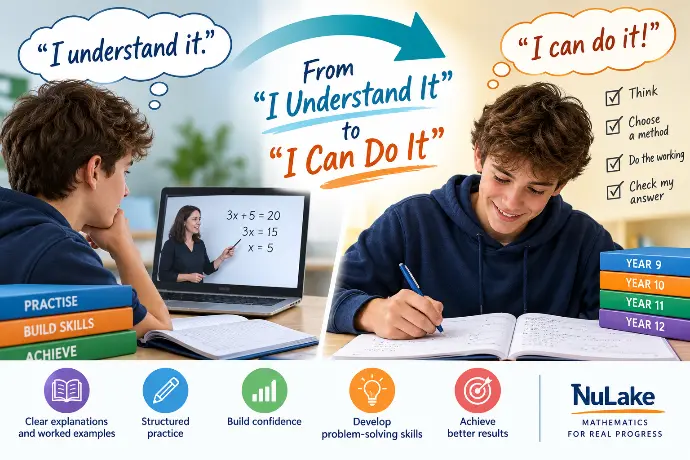
From “I Understand It” to “I Can Do It”
Why mathematics has to be done, not merely watched
Blog
Why Visual Reasoning Matters
Visual reasoning strengthens mathematical understanding in several ways:
Blog
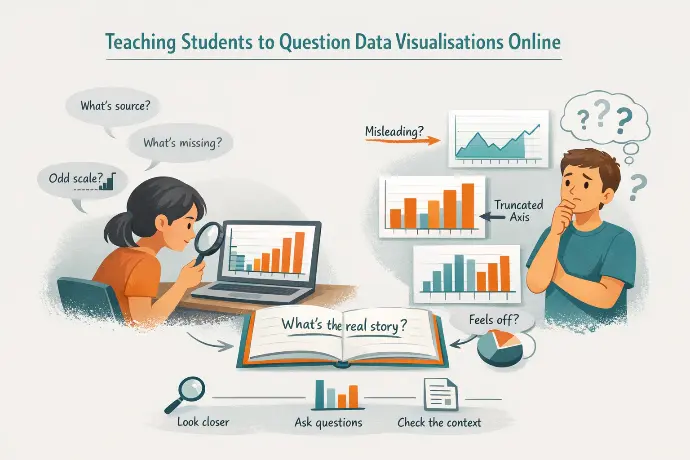
Teaching Students to Question Data Visualisations Online
Online spaces are overflowing with charts - colourful, confident, and often misleading. Students scroll past bar graphs on social media, line charts in news feeds, and infographics in videos long before they learn how to interpret them.
Blog
We Live in a World of Data - and Graphs Are Its Storytellers
Every day, we’re surrounded by data:
Blog
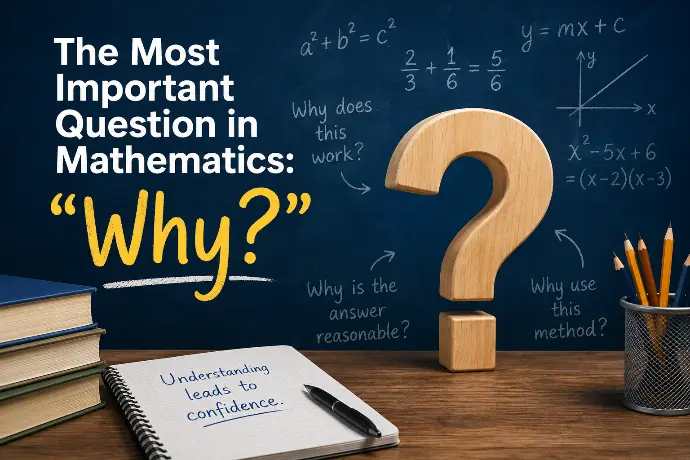
Knowing the Rule Is Not the Same as Understanding It
Consider a student learning to divide fractions. They may be taught:
Blog
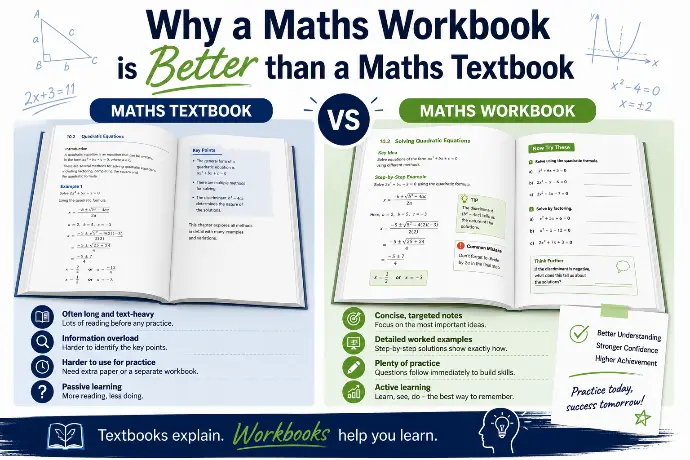
Why a Maths Workbook is Better Than a Maths Textbook
For generations, maths textbooks have been a staple in classrooms. They provide comprehensive explanations and reference material, but when it comes to helping students develop mathematical understanding and improve achievement, a workbook often delivers greater value.
Blog
Maths Myths Worth Questioning
Do you have to be fast to be good at maths? Does getting stuck mean you are no good at it? It is time to question a few familiar maths myths.